Scroll through the Instagram feeds of ten different ketamine or psychedelic therapy clinics, and you will see the exact same thing: A stock photo of a sunrise. A generic Canva graphic that says "Healing is not linear." And a picture of a comfortable chair.
Clinic owners post this content because they have to post something, and more importantly, they are terrified of getting their accounts banned by Meta's strict pharmaceutical algorithms.
But here is the harsh reality: Generic fluff does not book patients.
If a patient is considering asking you to chemically alter their consciousness to treat debilitating, lifelong depression, a pastel graphic about "taking deep breaths" isn't going to push them over the edge to book a $3,000 treatment package. They need raw authority. They need to know you understand their profound pain.
You need to abandon the fluff and adopt the "Integration-First" Content Strategy.
Key Takeaways
- The medicine is not the hero. Your content should focus on the psychological integration, not the molecule itself.
- Beat the algorithm. "Integration-First" content naturally avoids the buzzwords that trigger Meta's drug compliance bans.
- Vulnerability builds authority. Answering the terrifying, unasked questions your patients have will separate you from competitors who only post aesthetic graphics.
Why Does Meta Constantly Ban Ketamine Clinics (And How to Pivot)?
Let's address the elephant in the room: marketing psychedelic medicine on traditional social channels is a compliance nightmare.
Meta (Facebook and Instagram) uses automated bots to scan for terms related to controlled substances. If you run an ad campaign highlighting "Ketamine Therapy," you are highly likely to face ad account restrictions.
Most clinics respond to this suppression by retreating into safe, boring, meaningless content.
The Pivot: You must stop marketing the medicine and start marketing the container.
Think about it: the ketamine itself is a commodity. They can get it at a cheap IV drip center. What makes your clinic unique—what justifies a premium price—is the psychotherapy, the preparation, and the integration. That is your clinical moat. And luckily, Meta has absolutely no problem with you marketing psychotherapy and emotional integration.

Action Step: Audit your last 10 social media posts. If they could belong to a yoga studio or a generic wellness brand, delete them. Every post must assert deep clinical authority.
What Defined the "Integration-First" Content Pillars?
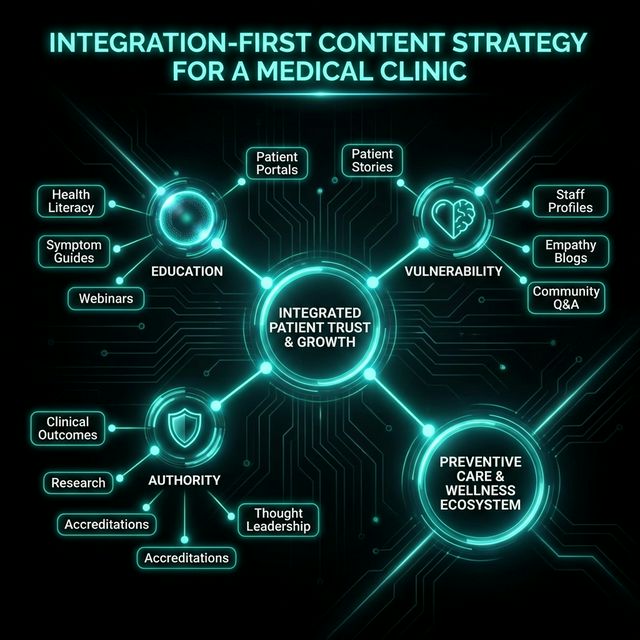
To execute this strategy, you must organize your content into three distinct pillars.
How Can Content Deconstruct Patient Fear Upfront?
Patients are terrified of psychedelic therapy. They are afraid of losing control, discovering something dark about themselves, or simply feeling nothing at all.
Your content should proactively answer the darkest, most vulnerable questions they are too afraid to ask on a consultation call.
Content Examples:
- Short-form Video: "What happens if you have a panic attack during a session? Here is our exact clinical protocol to keep you safe."
- Carousel Post: "The 3 boundaries you need to set with your family before starting treatment."
- Text Post: "Why feeling worse after session #2 is actually a sign the neuroplasticity is working."
Why Must You Showcase the Vulnerability of Your Clinic's Container?
Patients want to see the human faces that will sit with them during their most vulnerable moments. Do not hide your staff behind a logo.
Bring your Care Coordinators, your nurses, and your clinical directors to the forefront. Let them speak about their passion for the work.
Content Examples:
- Video Interview: Have your head nurse describe what it looks like when a patient truly lets go of their trauma for the first time.
- Behind the Scenes: Walk the viewer through the treatment room. Show them the weighted blankets, the soundscape playlists, the dim lighting. Explain why these elements exist from a trauma-informed perspective.
Why Does Illustrating "Life After the Medicine" Build Authority?
This is the core of the Integration-First strategy. Show the patient what the finish line looks like. Do not just promise that their PHQ-9 depression scores will drop; explain how their real, tactile life will change once their neuroplasticity opens up.
Content Examples:
- Case Study (Anonymized): "How restoring the brain's default mode network allowed a patient to reconnect with their estranged daughter."
- Actionable Advice: "5 journaling prompts to use in the 48-hour neuroplastic window following a breakthrough session."
- Op-Ed: "Why the medicine is only 20% of the healing, and the integration work is the other 80%."
How Can You Ultimately Stop Being Treated Like a Local Commodity?
When you implement the Integration-First strategy, two things happen.
First, your compliance issues vanish. You are no longer triggering algorithm flags because you are discussing psychology, neuroscience, and human connection, not controlled substances.
Second, you stop competing on price. A patient who consumes 10 videos of your clinical director explaining how to navigate the psychological shadow-self will not care that the clinic down the street is offering infusions for $100 less. They have built an unbreakable parasocial trust with your brand.
If you are tired of playing it safe and want to start building a media ecosystem that demands authority, book a strategy session with us.