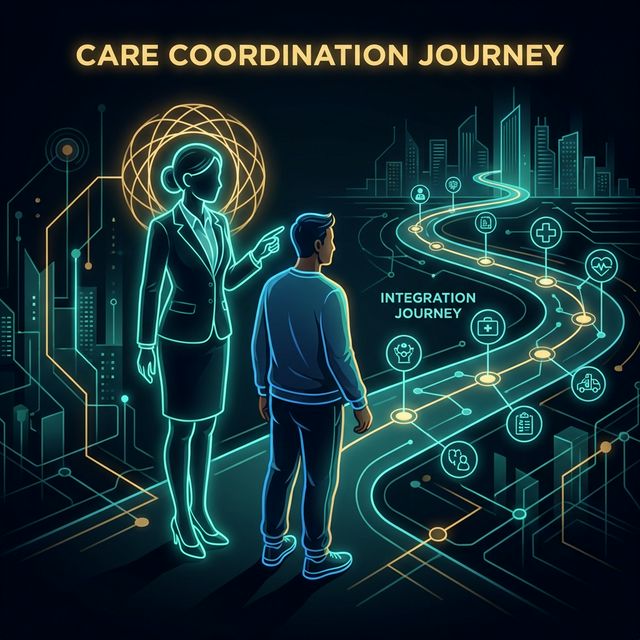
Most ketamine, TMS, and Spravato clinics treat the front desk as a pure administrative cost center. You hire someone friendly, give them a headset, and tell them to "answer phones and schedule intakes."
This is a multi-million-dollar mistake.
In psychedelic and advanced psychiatric care, your front desk is the #1 revenue AND clinical outcomes lever in your entire business. That person is not processing copays for a flu shot. They are engaging in highly complex, emotionally fraught conversations with individuals in crisis. They are asking patients to invest thousands of dollars out-of-pocket for an intimidating, non-traditional treatment. They are also the coordinator of post-session integration—the process that determines whether a patient achieves lasting results or slides back into old patterns.
If you have a traditional medical receptionist in this role, you are losing patients AND clinical outcomes. Here is exactly why you need an "Integration Guide" (specialized Care Coordinator) and how to build this system.
Key Takeaways
- Standard receptionists destroy conversions and outcomes. They handle scheduling; they cannot hold space for the emotional weight of deciding whether to start psychedelic therapy.
- Integration starts at the first phone call. Your Integration Guide sets clinical expectations, conducts pre-screening, and later manages post-session care coordination.
- Three KPIs predict everything. Speed-to-Lead, Booking Rate, and Show Rate are the metrics that drive revenue and clinical effectiveness.
- This role is your clinical quality gatekeeper. The expectations and safety framework set during the first conversation compound throughout the entire patient journey.
Why Does the Traditional Receptionist Model Fail in Psychedelic Medicine?
A 2024 rater8 nationwide survey found that 84% of patients check online reviews before booking care, and 61% now prioritize reviews over personal referrals. In psychedelic medicine, where stigma and fear are high, the person who answers the phone isn't just scheduling — they're the first clinical touchpoint.
Imagine the standard mental model of a medical receptionist: high volume, low complexity, fast turnaround. Process the insurance card, print the forms, move to the next call. This works for routine medical care.
What happens in psychedelic medicine: A patient struggling with treatment-resistant depression and suicidal ideation calls your clinic. They are terrified. They want to know what ketamine feels like, whether it is safe, whether it will actually work. Your traditional receptionist responds: "We have an opening Tuesday. The intake is $350. Can I get your date of birth?"
Why this fails: The patient feels processed, not heard, and scared away by abrupt financial reality without clinical reassurance. They hang up thinking, "Maybe this is too intense for me," or "If they cared, they would listen to my story."
What actually needs to happen: The person answering your phones must recognize that the caller is in a Vulnerability Window. Their primary job is to validate pain, establish safety, and demonstrate clinical competence—before any scheduling happens.
This is what an Integration Guide does.
What Are the Three Pillars of an Effective Integration Guide?
When you hire or train an Integration Guide, you are assembling a person with a very specific combination of clinical awareness, psychological intuition, and sales resilience.
Pillar 1: Empathetic Clinical Anchor
When patients call to inquire about ketamine or TMS, they are often at the lowest point of their lives. Your Integration Guide must embody immense emotional intelligence.
They are comfortable hearing heavy trauma histories without rushing the patient off the phone. They understand that this first conversation IS part of the therapeutic container. If the guide feels safe and warm, the patient will assume the clinic is safe. If the guide feels cold and administrative, the patient will avoid even starting treatment.
This is not sales skill; this is clinical presence.
Pillar 2: Expectation-Setter and Pre-Screening Gatekeeper
As detailed in our post on KAP marketing and patient expectations, patients often arrive seeking a "silver bullet cure." If your medical team spends the intake deconstructing these fantasies, they waste valuable clinical time and the patient feels misled.
Your Integration Guide is the first line of defense. They gently reframe treatment from "magic cure" to "a powerful neuroplastic tool that requires active psychological engagement." They also perform critical pre-screening: unmanaged hypertension? History of psychosis? Uncontrolled substance use? Your Integration Guide asks these questions and disqualifies inappropriate candidates before they reach your clinician.
This saves your clinical team hours of wasted intake time.
Pillar 3: Post-Session Integration Coordinator
This is where most clinics fail entirely. Integration—the processing of ketamine insights through journaling, meditation, therapy, and lifestyle change—is where most of the real healing occurs. The days and weeks after a session are often more clinically important than the session itself.
Your Integration Guide provides the post-session structure that ensures this happens:
- Sending integration materials (journaling templates, meditation guides, FAQ documents) within 24 hours of the session
- Scheduling follow-up therapy appointments while neuroplasticity is highest
- Text reminders about integration practices in the critical 48-hour window
- Checking in on adherence to post-session protocols
- Identifying patients who are struggling post-session and escalating to clinical staff
Without this, patients have a profound experience and then do nothing with it. With it, they internalize new mental patterns and achieve lasting change. The difference is not clinical; it is operational. And that operation falls to your Integration Guide.
Why Does Integration Matter During the Neuroplasticity Window?
Research published in Translational Psychiatry (2023) demonstrates that ketamine produces rapid neuroplasticity changes — dendritic spine development begins within 2-4 hours post-dose, with peak structural remodeling at 24-72 hours. This creates a limited window where therapeutic integration has outsized impact on patient outcomes.
Ketamine works partly through its immediate anxiolytic and dissociative effects. But the bigger mechanism is neuroplasticity—the brain's window of heightened malleability in the hours and days after a session.
During this window, the brain is primed to rewire. Old patterns loosen. New neural pathways can be formed. But this only happens if the patient actively engages through:
- Journaling to process insights and anchor them in language
- Therapy conversations with a trained therapist to interpret the experience
- Meditation and mindfulness to sustain the neuroplastic state
- Behavioral changes (new habits, new routines) that physically rewire neural circuits
Without intentional integration, the neuroplastic window closes and the patient returns to baseline patterns. This is why clinics that emphasize integration see superior outcomes and need fewer total sessions than clinics that only provide infusions.
Your Integration Guide is the person ensuring that every patient leverages their neuroplastic window.
What Three KPIs Predict Clinic Revenue and Patient Outcomes?
You cannot manage what you do not measure. Your Integration Guide should report on three specific metrics every single week.
KPI #1: Speed-to-Lead
Definition: Time elapsed between a new inquiry (form submission, phone call, email) and human response.
Target: Under 5 minutes during business hours.
Why it matters: A desperate patient will call multiple clinics. Whichever responds first and sounds competent gets the consultation booking. Speed-to-Lead is often the decisive factor in competitive markets. For the full breakdown of why response time determines patient conversion, see The Vulnerability Window: Speed-to-Lead for Ketamine Clinics.
Execution: Deploy a 60-second automated text ("Thanks for reaching out. Our Care Coordinator will call you within 5 minutes") followed by a relentless human follow-up. If your Integration Guide cannot respond within 5 minutes, you need two people or a better phone routing system.
KPI #2: Lead-to-Consultation Booking Rate
Definition: Out of 100 people who submit a form or call, how many get scheduled for a discovery call or medical intake?
Target: 40% or higher.
Why it matters: This metric reveals both your script quality and your follow-up persistence. If this number is below 30%, you have a massive conversion bottleneck. Usually it is one of: (a) your scripts don't address patient fears, (b) your follow-up is not persistent enough (should be 3-5 touches), (c) you are not handling price objections correctly. See Handling the "Too Expensive" Objection for scripts your Integration Guide can use.
Execution: Record and audit your patient calls. Identify the top objections ("It's too expensive," "I need to talk to my spouse," "I'm scared of a bad trip"). Role-play these scenarios relentlessly until your Integration Guide handles them effortlessly.
KPI #3: Consultation Show Rate
Definition: Out of 100 patients scheduled for a discovery call or intake, how many actually show up?
Target: 80% or higher.
Why it matters: Getting a patient on the calendar is only half the battle. Fear increases as the appointment nears. They will get cold feet and try to no-show. Your Integration Guide is responsible for the pre-appointment nurture sequence that pushes show rate above 80%.
Execution: Send a nurturing email sequence (3 emails: confirmation, warm welcome, day-before reminder) and text reminders the day of. Include a short video of your clinic or clinician (humanizing the experience), FAQ document, and a direct phone number if they have questions.
How Do You Build the Integration Guide System?
Job Description: What Does an Integration Guide Actually Do?
Your Integration Guide owns the patient journey from first inquiry through post-session follow-up. Specific responsibilities:
Patient Acquisition Phase:
- Answer incoming calls/chats with clinical presence and empathy
- Conduct initial vulnerability conversation to understand patient pain
- Perform pre-screening (medical disqualifiers)
- Handle objections and price negotiations
- Schedule discovery calls or medical intakes
- Track Speed-to-Lead, Booking Rate
Pre-Appointment Phase:
- Send confirmation emails and nurture sequences
- Answer basic clinical and logistical questions
- Manage patient anxiety through FAQ documents and videos
- Confirm appointments and send reminders
- Track Show Rate
Post-Appointment Phase:
- Send post-session integration materials within 24 hours
- Provide journaling templates, meditation guides, therapy resources
- Schedule follow-up appointments and therapy sessions
- Send 48-hour and 7-day check-ins
- Escalate struggling patients to clinical team
- Gather outcome data and feedback
Compensation Model: Align Incentives
Base Salary: At or above the upper median for medical front desk staff in your region. ($45,000-$65,000 depending on location and experience.)
Performance Bonus Structure:
- $50-100 per consultation successfully booked
- $100-300 per consultation that shows up
- Monthly bonus for meeting all three KPIs (total: $500-2,000/month for high performers)
This structure aligns your Integration Guide's financial incentive with clinic revenue. They are not just processing scheduling; they are directly generating revenue.
Training Protocol: What Must They Know?
Your Integration Guide must be trained on:
- Clinical knowledge: Ketamine mechanism of action, neuroplasticity, ketamine vs. TMS vs. Spravato, common patient fears and clinical reframes
- Pre-screening: Key disqualification questions (history of psychosis, unmanaged hypertension, active substance abuse)
- Psychological presence: How to hold space, active listening, validating vulnerability
- Sales scripts: Handling the top 5 patient objections; confident price explanation (never apologize for cost)
- Integration protocols: Post-session best practices, journaling frameworks, meditation guidance, therapy coordination
- Systems: Your EHR, scheduling software, CRM, how to document interactions
Invest 2-4 weeks in structured onboarding. Role-play every scenario. Record calls and review weekly.
Why Do Clinics That Scale to 7 Figures All Have This Role?
The fastest-growing ketamine, TMS, and Spravato clinics do not scale because they discovered better medicine. They scale because they mastered patient journey operations.
They recognize that:
- The first phone call is a clinical event, not just scheduling.
- Integration is a repeatable system, not an afterthought.
- The front desk is a revenue department, not a cost center.
- KPIs drive behavior, and behavior drives outcomes.
Whether you hire locally or use a highly-trained, bilingual offshore team to manage lead volume, the objective is identical: never let administrative efficiency override human connection.
The patient who feels heard, understood, and held safe by your Integration Guide will invest $3,000-$6,000 in treatment. The patient who feels processed will disappear. And the patient who receives structured integration will achieve lasting results and become your best referral source.
Build this role first. Everything else follows.
Read Next
- The Vulnerability Window: Speed-to-Lead for Ketamine Clinics — Why the first clinic to respond wins the patient
- Handling the "Too Expensive" Objection: Sales Scripts for Ketamine Clinics — Price objection handling your Integration Guide needs
- 7 Ketamine Clinic Marketing Mistakes Killing Your Growth — The operations and marketing mistakes that cost you patients