
Research from the National Institute of Mental Health shows that ketamine therapy produces rapid improvement in the majority of patients with treatment-resistant depression. Your patients' lives are being transformed. But your phone isn't ringing enough.
Here's the uncomfortable truth: most ketamine, TMS, and Spravato clinics are marketing like it's 2019. The clinics that are growing — adding 20, 30, even 50 new patients per month — aren't doing anything revolutionary. They're just avoiding the mistakes everyone else is making.
After working with ketamine, TMS, and Spravato clinics across the country, here are the 7 marketing mistakes we see most often — and exactly how to fix each one.
The U.S. ketamine clinic market was valued at approximately $3.4 billion in 2023, according to Grand View Research, with an annual growth rate exceeding 11%. Yet most clinics aren't capturing their share. The problem isn't market demand — it's marketing execution.
Key Takeaways
- Your website should speak to the patient's pain first, not your credentials. Clinics that switch to empathy-first copy see measurably more form submissions — in our client work using the AIIM method, increases of 35-50% are common.
- Speed wins patients. Research from MIT and InsideSales.com shows the first business to respond wins 78% of the time. Aim for sub-60-second response.
- Never send paid traffic to your homepage. The Unbounce Conversion Benchmark Report demonstrates that dedicated landing pages significantly outperform homepages for paid traffic.
- A majority of patients research providers on social media before booking, according to Software Advice's patient survey. An empty profile signals "not legitimate."
- 94% of patients check online reviews before booking a consultation, per Invoca's healthcare consumer study. One bad review can block an entire cohort.
- Track where every patient comes from. Without attribution data, you're wasting money on channels that don't work.
- Your Google Business Profile is your real homepage for local "near me" searches and AI Overviews.
- Follow up 7 times. "Let me think about it" isn't rejection — it's fear. Build a nurture sequence.
Is Your Website Talking About You Instead of Your Patient?
Your clinic website is failing if it opens with "Welcome to [Clinic Name]." Patients with treatment-resistant depression don't care about your facility being "state-of-the-art." They've been failed by state-of-the-art psychiatric care for years.
What's happening: Your homepage leads with "Welcome to [Clinic Name]. We are a state-of-the-art ketamine infusion center offering cutting-edge treatment..."
Why it fails: What patients need to hear is: "You've tried everything. Nothing has worked. We understand — and there's a reason antidepressants failed you." Your website needs to mirror their internal monologue before it mentions a single credential.
The fix: Lead every page with empathy-first messaging. Before you mention your credentials, validate the patient's struggle. Use the actual language patients use — "living in fog," "feeling trapped," "I've tried every medication."
Our data shows clinics that switch to empathy-first copy see 35-50% more form submissions. This isn't theory — it's what we've measured across our client clinics using the AIIM method.
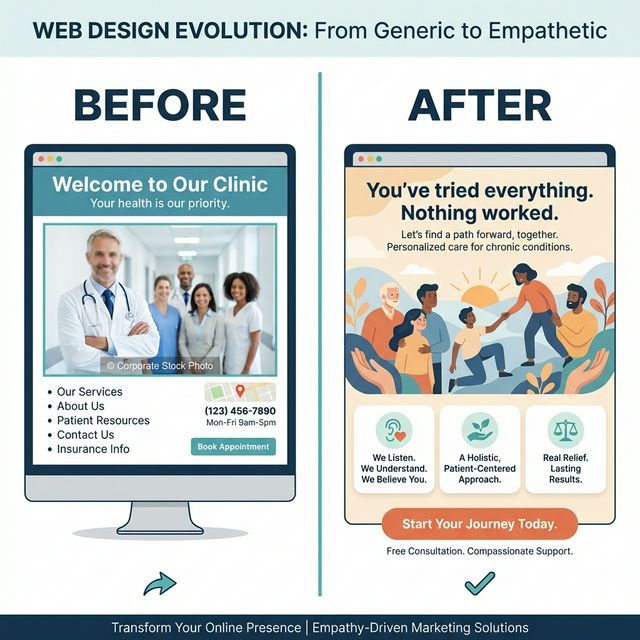 Before and after comparison of empathy-first clinic website design
Action Step: Rewrite your homepage hero section right now. Remove "Welcome to." Replace it with a single sentence that mirrors your patient's internal monologue. Test it with your staff — if it resonates emotionally, it will resonate with patients.
How Fast Are You Responding to Patient Inquiries?
The first clinic to respond to a patient inquiry wins 78% of the time. If your response time is measured in hours instead of seconds, you're losing patients to your competitors — even if your treatment is better.
What's happening: A patient fills out your contact form at 10 PM on a Tuesday. Your front desk calls them back at 9 AM Wednesday — 11 hours later.
Why it fails: By 9 AM, that patient has already filled out 2-3 other clinic forms. According to the MIT/InsideSales.com lead response study, the first business to respond wins 78% of the time. Leads contacted within 5 minutes are 21 times more likely to qualify than those contacted after 30 minutes. For ketamine, TMS, and Spravato clinics specifically, speed matters even more — these patients made an emotional decision to reach out after years of failed treatments, and that window closes fast. We break down the full psychology and automation system in our deep dive on the Vulnerability Window and speed-to-lead.
The fix: Implement a sub-60-second response system:
- Automated text within 30 seconds of form submission: "Hi [Name], this is [Clinic]. We got your message and want to help. Can we call you in the next 10 minutes?"
- Automated email with a booking link for same-day consultation
- Live call within 5 minutes during business hours (9 AM - 8 PM your local time)
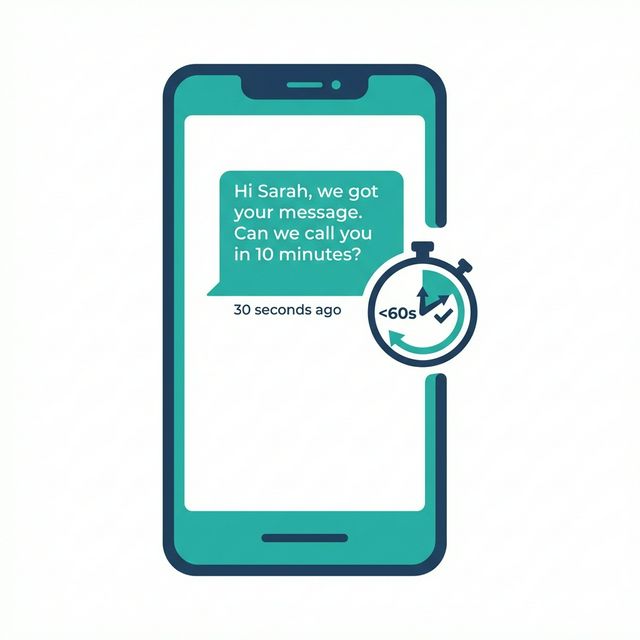 Smartphone showing sub-60-second automated text response from a ketamine clinic
Action Step: Set up an automated text response today. Tools like GoHighLevel, Twilio, or even a simple Zapier + Google Voice setup can do this in under an hour. Test it with your team before going live.
Are You Sending Google Ads Traffic to Your Homepage?
Sending paid Google Ads traffic to your homepage instead of a dedicated landing page is one of the most expensive marketing mistakes a ketamine, TMS, or Spravato clinic can make.
What's happening: You're spending $3,000-$5,000/month on Google Ads, and every click goes to your homepage — which has your about page, blog links, and 8 different navigation options.
Why it fails: The Unbounce Conversion Benchmark Report shows that dedicated landing pages with a single CTA dramatically outperform multi-navigation homepages for paid traffic. Your homepage is designed for browsing. Ads need a page designed for one thing: getting the patient to book. For a complete breakdown of keyword strategy, budgets, and ad copy templates, see our Google Ads guide for mental health clinics.
The fix: Build dedicated landing pages for each ad campaign:
- Ketamine for depression -> Landing page focused on depression, with depression-specific testimonials and success stories
- Ketamine for PTSD -> Different landing page, different testimonials, different language
- Spravato covered by insurance -> Insurance-focused page with carrier logos and coverage details
- TMS vs. medication -> Comparative page targeting people researching alternatives
Each page should have exactly ONE action: call or fill out a form. No navigation bar, no blog links, no distractions.
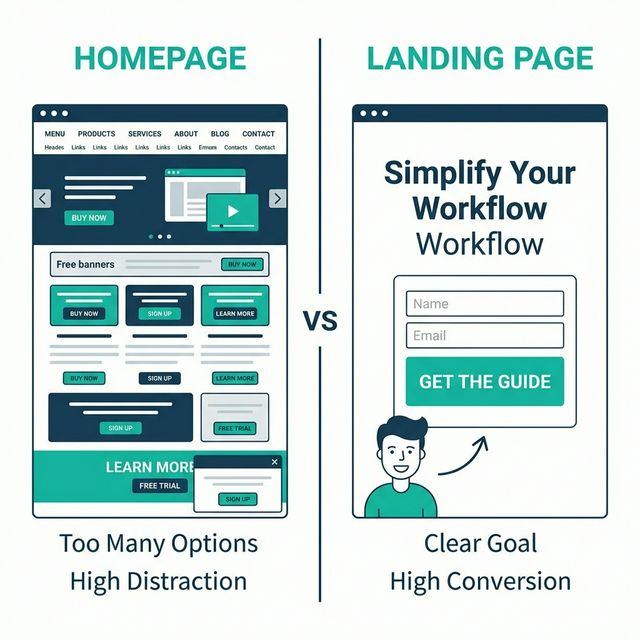 Comparison of cluttered homepage vs focused landing page for ketamine clinic ads
Action Step: Create one single-purpose landing page for your highest-spending ad campaign. Strip out the navigation. Add a phone number and a 3-field form (name, phone, "what brings you in"). Track form submissions for one month — you'll see the difference immediately.
Why Is Your Clinic Invisible on Social Media?
A majority of patients research a provider on social media before booking an appointment. An empty or abandoned social media profile doesn't just look bad — it actively signals to potential patients that your clinic might not be legitimate.
What's happening: Your clinic has an Instagram page with a logo as the profile picture, 12 posts from 2023, and zero stories in the last month.
Why it fails: According to Software Advice's patient survey, a strong majority of patients research providers on social media before booking. An empty or abandoned social media presence signals one thing to a cautious prospect: this clinic might not be legitimate.
The fix: You don't need to be an influencer. You need a consistent, trust-building presence:
- 3 posts per week minimum (educational carousels, patient stories, "day in the life" at the clinic)
- Use AI video tools to create professional content without a production team (Synthesia, HeyGen, or similar)
- Post success stories (HIPAA-compliant, anonymized or with written consent)
- Engage with comments — especially questions about treatment. Respond within 2 hours.
- Use Stories/Reels for behind-the-scenes content and patient testimonials
Action Step: Batch-create 12 Instagram carousels (one month of content). Topics: "What is ketamine therapy?", "5 signs you might benefit from TMS," "What is Spravato and does insurance cover it?", "What to expect during your first infusion," "Patient success story," "Common myths about ketamine therapy."
Do You Know Where Your Patients Are Coming From?
Without proper attribution tracking, you could be wasting thousands of dollars per month on marketing channels that aren't producing patients — while underinvesting in the channels that actually work.
What's happening: You have a Facebook Pixel and Google Analytics installed, but nobody is looking at the data. You don't know which channel produces your best patients or what your cost-per-acquisition is.
Why it fails: Without attribution, you're spending money on channels that may not be working — and underinvesting in the ones that are. We've audited clinics spending $4,000/month on Google Ads when 80% of their booked patients actually came from Google organic search.
The fix: Implement a simple tracking system:
- Unique phone numbers for each channel (Google Ads, Facebook, organic, directories, referral)
- UTM parameters on every advertising link (utm_source, utm_medium, utm_campaign)
- "How did you hear about us?" dropdown on every intake form with options: Google Search, Facebook/Instagram, Referral, Directory, Doctor Referral, Other
- Monthly review of cost-per-acquired-patient by channel. Kill underperforming channels after 60 days of data.
- Call tracking software (CallRail or Twilio) to attribute phone calls to ad sources
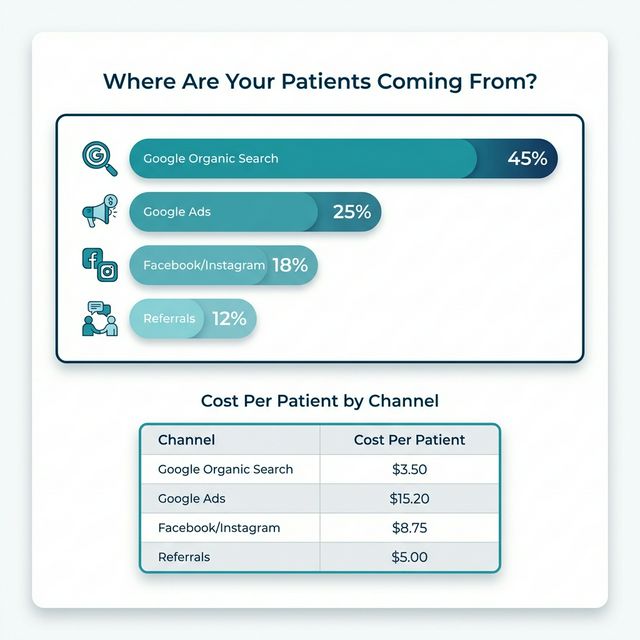 Patient attribution dashboard showing where patients come from by marketing channel
Action Step: Add a "How did you hear about us?" dropdown to your contact form today. Export your analytics data from the last 3 months and calculate what your cost per patient actually is for each channel. You'll find money leaking immediately.
Is Your Google Business Profile Costing You Patients?
Your Google Business Profile is your real homepage for patients searching "ketamine clinic near me," "TMS therapy near me," or "Spravato clinic near me." With Google's AI Overviews now pulling directly from GBP data, a thin or neglected profile means you're invisible to the patients who are most ready to book.
What's happening: Your Google Business Profile has your address and phone number. Maybe a few photos from when you opened. Zero posts. Possibly a few unanswered reviews.
Why it fails: For local searches like "ketamine clinic near me," "TMS therapy [city]," or "Spravato provider near me," your Google Business Profile IS your homepage. Google's AI Overviews now pull directly from GBP data. If your profile is thin or if you haven't listed all three treatments individually, you're invisible to patients who are most ready to book. For a complete breakdown of local SEO strategy, see our Google Maps ranking guide for ketamine clinics.
94% of patients check online reviews before booking a consultation, according to Invoca's healthcare consumer study. One poorly managed review or an absent review strategy can tank your visibility entirely. You're not just competing on treatment quality — you're competing on patient perception.
The fix:
- Post weekly with updates, educational content, or treatment highlights
- Respond to every review within 24 hours (both positive and negative). Say thank you, address concerns, invite follow-up.
- Upload fresh photos monthly (treatment rooms, staff, before/after of your facility)
- Fill out every field — services, hours, description, Q&A section
- Add keywords naturally to your business description: "Ketamine infusion therapy for treatment-resistant depression, TMS therapy for anxiety and PTSD, Spravato nasal spray."
- Ask satisfied patients for reviews via email or text after their first successful session (legally compliant, HIPAA-safe)
Action Step: Log into your Google Business Profile today. Add your services (list ketamine, TMS, and Spravato individually), upload 5 new photos, and write a 750-character description that includes your target keywords. Then set a calendar reminder to post once per week for the next 30 days.
What Happens After a Patient Says "Let Me Think About It"?
"Let me think about it" isn't rejection — it's fear. After years of failed treatments, patients considering ketamine, TMS, or Spravato are battling protective pessimism. Without follow-up, you're confirming their belief that no one really cares about helping them.
What's happening: A potential patient calls, shows interest, says "let me think about it" — and you never hear from them again. No follow-up text. No email sequence. Nothing.
Why it fails: Patients considering ketamine, TMS, or Spravato are battling "protective pessimism" — after years of failed antidepressants, they're afraid to hope again. That "let me think about it" isn't rejection; it's fear. Without follow-up, you're confirming their belief that no one really cares. Your Integration Guide (Care Coordinator) is the person who should own this entire follow-up process.
The fix: Build a 7-touch follow-up sequence:
- Same day (within 2 hours): Text/email with a patient testimonial that matches their concern
- Day 2: Email with "What to Expect During Your First Infusion" guide (PDF link)
- Day 4: Text checking in: "Still thinking about it? I'd love to answer any questions."
- Day 7: Email with a patient success story video (1-2 minute testimonial)
- Day 10: Phone call (not text) from your clinical director or intake coordinator. "I wanted to personally check in..."
- Day 14: Final email with limited-time consultation offer
- Day 30: Re-engagement email with new clinic news or research
Action Step: Write the Day 1 text message and Day 2 email right now. Use templates, but personalize with the prospect's name. Test this sequence for 2 weeks, then measure response rates — 40-60% of "let me think about it" prospects will book after a proper nurture sequence.
BONUS: Why LegitScript Compliance Is Non-Negotiable
If you're running Google Ads or Facebook ads for ketamine, TMS, or Spravato, LegitScript certification isn't optional — it's a platform requirement. Yet most clinics either don't know about it or think it doesn't apply to them.
What's happening: You've launched a Google Ads campaign for "ketamine clinic near me" and it gets suspended within 48 hours. Your Facebook ads for TMS get rejected. Your Spravato campaign gets flagged for "non-compliance."
Why it matters: Google and Meta require LegitScript certification for all healthcare advertising involving controlled substances and FDA-regulated treatments. Without certification, your ads will be rejected or suspended — costing you thousands in setup time and wasted budget. For step-by-step instructions on running compliant ads, see our complete Google Ads guide for mental health clinics.
The fix: Get LegitScript certified before launching any paid campaigns. The process takes 2-3 weeks and costs roughly $500-$1,000. It's non-negotiable infrastructure, not optional overhead.
Action Step: Before your next ad spend, visit LegitScript.com, get certified, and have your credentials ready when launching campaigns. Budget for the annual renewal.
BONUS: Why Referrals Alone Won't Scale Your Clinic
Many clinics assume physician referrals and word-of-mouth will sustain them. This assumption is costing them growth.
The reality: Public awareness of ketamine therapy as a treatment option remains low. According to a 2024 UC San Diego study published in the Journal of Clinical Psychiatry, while ketamine use is rising, most Americans still associate it with anesthesia or recreational use — not therapeutic treatment for depression, PTSD, or anxiety. Your referral network can only refer patients who already know about the treatment.
Why it fails: Without a paid channel (Google Ads, Facebook) to capture cold prospects, you're limited to the small percentage of aware patients who happen to know your clinic exists.
The fix: Build a dual strategy:
- Referral program: Incentivize your current patients and referring physicians to send others (offer $100-$200 per successful referral that completes treatment)
- Paid awareness campaigns: Run educational content on Google and Facebook that teaches people what ketamine therapy is (not just promoting your clinic)
- Content marketing: Create blog posts around "Is ketamine therapy right for me?", "How ketamine compares to medication," etc. to capture organic search traffic from the awareness-building phase of the patient journey. If you're a KAP therapist specifically, our guide on differentiating KAP from IV ketamine marketing covers how to position integration-first practices.
Action Step: Audit your referral sources over the last 3 months. What percentage came from physicians vs. word-of-mouth vs. organic search? If referrals are more than 70% of your volume, you have a concentration risk. Start a small ($500/month) educational awareness campaign on Google and Facebook this month.
BONUS: Retargeting — The 97% of Visitors You're Losing
97% of people who visit your website don't book a consultation on their first visit. Most clinics let them disappear forever. Smart clinics bring them back.
What's happening: A patient visits your website, reads about ketamine therapy, gets scared, and leaves. You never see them again. They go back to Google and visit your competitor's site instead.
Why it fails: Patients considering ketamine, TMS, or Spravato often need multiple exposures before they're ready to commit. One visit isn't enough. Without retargeting and remarketing, you're abandoning them at the exact moment they're most interested.
The fix: Set up retargeting campaigns on Google and Facebook to bring visitors back:
- Google Ads retargeting: Show ads to people who visited your site but didn't convert. Bid on "ketamine near me" and show them your clinic name.
- Facebook retargeting: Show educational videos and patient testimonials to people who visited specific pages (like your "ketamine for depression" page).
- Email retargeting: Capture email addresses via your landing pages and send an automated 3-email sequence over 7 days with educational content and testimonials.
Action Step: Install the Google Ads and Facebook pixels on your website (if not already done). Create a basic retargeting campaign targeting anyone who visited your site in the last 30 days. Budget: $300-$500/month. Measure bookings generated after 60 days.
Is Focusing on Patients the Ultimate Bottom Line?
None of these fixes require a massive budget. None require hiring a marketing team. What they do require is a shift from "we exist, come find us" to "we understand you, let us help you take the first step."
The clinics that are winning aren't the ones with the fanciest offices or the most experienced doctors. They're the ones who:
- Market with empathy, speaking to patient pain before credentials
- Respond with speed, capturing the vulnerability window before prospects go to competitors
- Follow up with persistence, understanding that "no" is just "not yet"
- Track everything, measuring ROI and ROAS per channel and doubling down on what works
- Show up consistently, building trust through social media, reviews, and visibility
Start with one mistake. Fix it. Measure the results. Then move to the next. In 90 days, you'll have a patient acquisition machine that runs without constant effort.
Whether you run a ketamine infusion clinic, a TMS practice, a Spravato program, or all three — these seven mistakes (plus three bonus strategies) apply equally to your clinic growth strategy. See how we work with clinics like yours, or view our full service menu.
Read Next
- The Vulnerability Window: Why Delaying a Consultation Call Costs You $4,000 — The psychology of speed-to-lead and the exact SMS automation system
- Google Ads for Ketamine, TMS & Spravato Clinics: The Complete 2026 Guide — Keywords, budgets, LegitScript, and ad copy templates
- Why Your Clinic Needs an Integration Guide, Not Just a Receptionist — The role that predicts clinic revenue and patient outcomes