If you are opening a new mental health practice—or struggling to scale an existing one—you are faced with the most critical strategic decision in the modern psychiatric industry:
Which services should I actually offer?
The landscape is deeply fragmented. On one side, you have cash-pay IV Ketamine clinics pulling in high margins but battling high marketing acquisition costs. On the other side, you have insurance-heavy Spravato and TMS clinics dealing with exhausting prior authorizations but enjoying massive patient volume.
Choosing the wrong service mix will bleed your capital through empty chairs. Choosing the right one creates a highly defensible, unshakeable revenue engine. Let's break down the math.
Key Takeaways
- Cash is king, but volume is emperor. IV Ketamine provides fast cash flow, but Spravato/TMS scale much larger.
- Know your "Revenue Per Chair Hour." This is the ultimate metric for clinic profitability.
- The Hybrid Engine wins. The most successful clinics use insurance to acquire patients, and cash-pay to maximize margins.
Why Offer Cash-Pay IV Ketamine and KAP as Your Premium Service?
This is the glamorous side of the industry. The cash-pay model is attractive because it entirely sidesteps the Byzantine nightmare of insurance billing.
The Math:
- Average cost per 1hr infusion session: $400 - $800.
- Drug cost overhead: Minimal (Ketamine HCL is incredibly cheap).
- Major Overhead: Specialized nursing staff, psychotherapists (if offering KAP), and heavy digital marketing.
The Pros: Instant cash flow. High profit margins per session. Complete clinical freedom over dosing protocols without appealing to Aetna or UnitedHealthcare.
The Cons: Extremely high Patient Acquisition Cost (CAC). Because patients are paying thousands out of pocket, the sales cycle is long and friction-heavy. Your Integration Guide must master cost objection handling to close cash-pay patients. You are competing in a saturated "wellness" market.
 A high-end comparative dashboard UI for medical services comparing Ketamine vs TMS vs Spravato
The Verdict: IV Ketamine is excellent for boutique clinics focused on premium, white-glove psychedelic psychotherapy. However, scaling beyond 2-3 chairs becomes a dogfight for leads.
Is Offering Spravato Actually Worth the Insurance Hassle?
The numbers: Spravato (esketamine) medication costs approximately $590 per session under Medicare Part B, with most insured patients paying $10-50 per session after deductible. A full 21-session protocol averages $6,000 total patient cost. The question for clinic owners isn't whether to offer it — it's whether the administrative burden of REMS compliance and insurance billing justifies the margin.
Spravato (the Janssen Pharmaceuticals esketamine nasal spray) is FDA-approved and widely covered by commercial insurance and Medicare.
The Math:
- The revenue is strictly based on your payer contracts (J-codes for the drug, G-codes for the observation).
- Significant volume required.
The Pros: The phone rings off the hook. Because it is covered by insurance, the financial objection vanishes. Marketing Spravato is the easiest lead generation in the psychiatric space. Pair it with Google Ads and local SEO for maximum patient volume.
The Cons: The bureaucracy is suffocating. You must adhere to the strict REMS program, manage prior authorizations, and deal with specialty pharmacies. Furthermore, a patient occupies a chair for two full hours of mandatory observation, severely limiting your daily volume per room.
Does TMS TRuly Provide the Highest Lifetime Value?
A full TMS treatment course costs $8,000-12,000 and is covered by most major insurers including Medicare, with patients typically paying a $20-60 copay per session. At 36 sessions per protocol, TMS creates the highest per-patient revenue ceiling of any treatment modality — if you can handle the insurance billing.
TMS requires capital. The machines are expensive, but the ROI on a successful course of treatment is unmatched.
The Math:
- Equipment cost: $60,000 - $120,000+ per machine.
- Average reimbursement per course (36 sessions): $6,000 - $10,000.
- Session length: 15 to 30 minutes.
The Pros: The Revenue Per Chair Hour is phenomenal. Because modern TMS sessions are fast (often under 20 minutes), you can pipeline multiple patients per hour. Furthermore, TMS operators (often trained medical assistants or "TMS Techs") cost significantly less than the RNs or CRNAs required for IV Ketamine.
The Cons: High upfront risk. Prior authorizations for TMS are notoriously difficult, often requiring the patient to have failed 4+ antidepressant trials before insurance approves the treatment.
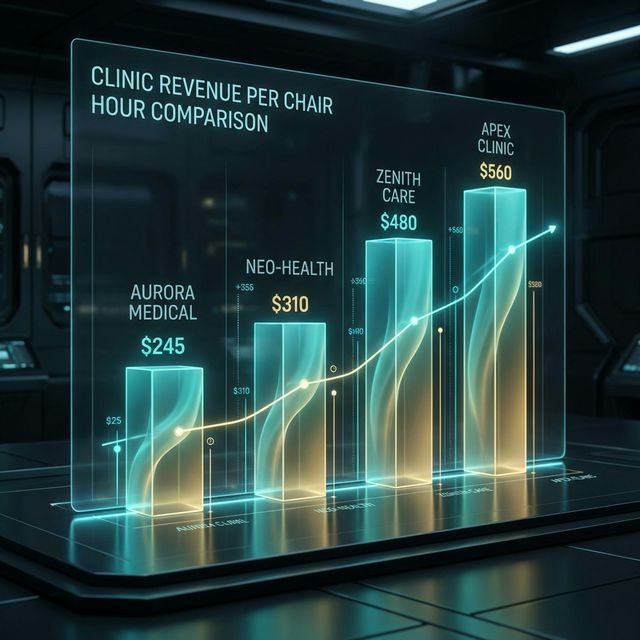 A futuristic glowing bar chart showing revenue per chair hour comparison
How Does the Hybrid Ascension Model Maximize Your Total Revenue?
The most profitable 8-figure clinics we work with do not choose just one. They build a synergistic ecosystem.
Phase 1: Volume Acquisition (TMS & Spravato) You heavily market your insurance-covered services. This drives an insurmountable volume of patients through your doors at a very low marketing cost.
Phase 2: Internal Referrals (IV Ketamine) Not every patient qualifies for TMS. Not every patient responds to Spravato. When you already possess a massive database of active, trusting patients, introducing them to your premium, cash-pay IV Ketamine offering is incredibly frictionless.
Your insurance services pay the staff and keep the lights on. Your cash-pay ketamine services generate the massive profit multipliers.
Action Step: Analyze your current patient flow. Ensure every Spravato and TMS patient is eventually introduced to your cash-pay offerings.
If you need a digital architecture that can seamlessly market distinct service lines while managing a complex flow of patient leads, we are the agency engineered to build it.
Read Next
- The "Too Expensive" Objection: Sales Scripts for Cash-Pay Ketamine — Close cash-pay patients without discounting
- Google Ads for Ketamine, TMS & Spravato Clinics: The Complete Guide — Drive leads to your multi-service clinic
- KAP vs. IV Infusions: The Differentiation Playbook — Help patients choose the right modality
- Emsella vs Emsculpt vs Emface: Best Service Mix Math - Service mix strategy for BTL device clinics